FREE GUIDE · Sent straight to your inbox · No spam
A FREE GUIDE FOR SUPPORTERS
How to Support Someone Facing Grief and Loss
Someone you care about is hurting, and you don't want to say the wrong thing.
You don't have to fix their grief. You don't need perfect words. This free guide gives you simple words, practical do's and don'ts, and a place to start when you're not sure how to show up.
Free 14-page guide. Read it in one sitting. Keep it for when you need it.
For bereavement, or any other painful loss.
GET YOUR FREE GUIDE
Learn what to say, what to avoid and how to offer support with greater confidence.
Free. Delivered instantly. No spam. Unsubscribe any time.
Your details will never be sold or shared.
Created by Grief Specialist Ghulam Fernandes
FOR ANYONE WHO WANTS TO HELP
You want to help.
You just do not know what to say.
Someone you care about is grieving and you're worried about saying the wrong thing. This free guide gives you simple, practical ways to know what to say, what to do and how to be there.
Free 16-page guide. Read it in one sitting. Keep it for when you need it.
GET YOUR FREE GUIDE
Learn what to say, what to avoid and how to offer support with greater confidence.
Free. Delivered instantly. No spam. Unsubscribe any time.
Your details will never be sold or shared.
Created by Grief Specialist Ghulam Fernandes
FOR ANYONE WHO WANTS TO HELP
You want to help.
You just do not know what to say.
Someone you care about is grieving and you are worried about saying the wrong thing. This free guide gives you simple, practical ways to know what to say, what to do, and how to be there.
Free 16-page guide. Read it in one sitting. Keep it for when you need it.
GET YOUR FREE GUIDE
Learn what to say, what to avoid and how to offer support with greater confidence.
Free. Delivered instantly. No spam. Unsubscribe any time.
Your details will never be sold or shared.
Created by Grief Specialist Ghulam Fernandes
Inside the free guide, you'll find
01
Five common slip-ups, and what to do instead
Well-meant things people often get wrong, and simple words to use instead.
02
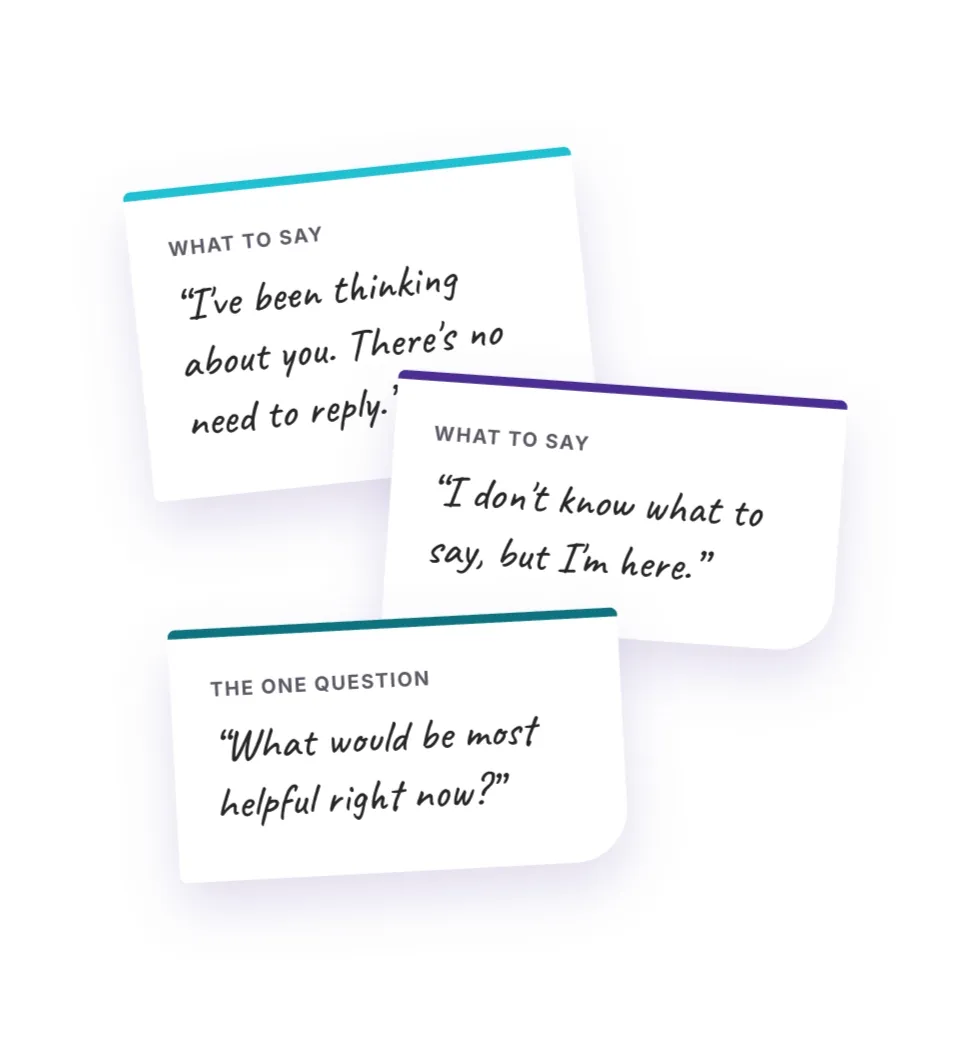
What to say when you don't know what to say
Simple examples you can use or adapt when the words won't come.
03
A question that helps without taking over
A simple question that helps you stop guessing what they need and gives choice back to the person who is grieving.
04
When to suggest extra support
Most grief support is steady, everyday care. But if you're worried, the guide helps you understand your role and when to encourage more support.
This is for you if…
Someone you care about is facing grief or loss, and you're not sure how to help.
Maybe they have lost someone. Maybe they're dealing with divorce, job loss, illness, miscarriage, pet loss, retirement or financial crisis. Grief can come from many different life events, not only bereavement. There are over 40 of them. If a loss doesn't fit neatly into "someone died," that doesn't make it smaller.
You want to be there. You just don't want to say or do something that makes an already difficult situation harder.
That's exactly why I created this guide.
It will help you reach out, offer support, and feel less afraid of getting it wrong.
You can read more about the different life events that can cause grief and loss on my blog.
Supporting someone at work? The principles apply there too, and you'll find details inside about my dedicated workplace resource that's in development.
Free. Delivered instantly. No spam, ever.

WHY I WROTE THIS GUIDE
When my mum died, I was thirteen. A well-meaning neighbour told me:
"You mustn't cry. You've got to be strong for your brothers and sisters, as you're the eldest now."
She said it once. I carried it for years.
I tried not to cry. I tried to be strong. I tried to be the child who coped.
She wasn't cruel. She was trying to help. She just didn't know those words would stay with me. That experience is part of why I became a Grief Specialist, and why I wrote this guide.
You don't need to be a trained counsellor to make a difference. You just need to care, and a little guidance. Sometimes support is a few words. Sometimes it's sitting beside someone without trying to fill the silence.
WHY I CREATED THIS
When my mum died, a well-meaning neighbour told me:
“You mustn't cry. You've got to be strong for your brothers and sisters.”
She meant well. I believed her, and I stayed stuck for years.
She wasn't being unkind. She simply hadn't been taught what was helpful and what wasn't. Most people haven't.
That experience is part of why I became a Grief Specialist, and why I created this guide. I want to help you be there for someone you care about without having to guess what might help.
A peek inside
INSERT SAMPLE PAGE PHOTO
Practical words for the moments when you freeze.
INSERT SAMPLE PAGE PHOTO
The one question that can stop you guessing what they need.
INSERT SAMPLE PAGE PHOTO
Simple reminders you can come back to when you need them.
As featured on
Listen to Ghulam's conversation about Handling Grief
Common questions
Is this only for bereavement?
No. Grief can follow many kinds of loss, not only a death. Whatever's behind it, the same principles in this guide still apply.
Do I need any experience or training?
No. It's written for ordinary people who care about someone and want to support them well. You don't need to be a Grief Specialist to help. You just need to notice, stay present, and know when it's time to point someone towards additional support.
What if I've already said the wrong thing?
Most people say unhelpful things because they care and don't know what else to say. That doesn't make you a bad person. What matters now is what you do next, and the guide will help you find a more supportive way forward.
What if they don't want to talk?
That's okay. Supporting someone doesn't mean forcing them to talk. Sometimes support is a message. Sometimes it's a practical offer. Sometimes it's sitting with them in the quiet. The guide shows you different ways to be there, even when they don't have the words.
What if I'm worried they're in immediate danger?
Please don't wait for the guide. If someone is in immediate danger, has seriously harmed themselves, or may act imminently, call 999 or go to A&E. Samaritans are available free, day or night, on 116 123. Text SHOUT to 85258 for free, confidential, 24-hour text support. For urgent mental health support that isn't an immediate emergency, call NHS 111 and select the mental health option, or use NHS 111 online. This is an England-specific service. In Wales, call 111 and press option 2. In Scotland, call 111 and choose the mental health option. In Northern Ireland, call Lifeline on 0808 808 8000.. If you're outside the UK, contact the emergency services or urgent mental health service where you live.
About Ghulam
Ghulam Fernandes is a Grief Specialist and founder of Handling Grief.
Trained through the Grief Recovery Method Institute and Edu-Therapy UK, Ghulam combines specialist training with her own experience of multiple losses.
Today, her work helps people dealing with grief, and the people around them who love them but feel unsure, helpless, or scared of getting it wrong.
If this guide helps you realise you'd like more support, you can find out more at handling-grief.com or email Ghulam directly at [email protected].
Meet Ghulam Fernandes
Ghulam Fernandes is a Grief Specialist and founder of Handling Grief.
Trained through the Grief Recovery Method Institute and Edu-Therapy UK, Ghulam combines specialist training with her own experience of multiple losses.
Her work helps people dealing with grief, and the people around them who desperately want to help but often don't know what to say or do.
If you'd like to explore working together, you can find out more at handling-grief.com.
You don't have to get it right. You just have to show up.
Free. Delivered instantly. No spam, ever.
Know someone who needs this? Share this page with them. It is free.
A LOOK INSIDE
Here is what you will find
Five Mistakes, Broken Down
The One Question
A Support Timeline
What each mistake looks like, why it does not help, and exactly what to say
instead. Real phrases for real moments.
A single phrase that puts the grieving person back in control, instead of you
guessing what they need.
How to show up in the first weeks, and why the months after matter more than
people expect.
Get the free guide, delivered instantly. No spam, ever.
Five Mistakes, Broken Down
What each mistake looks like, why it does not help, and exactly what to say
instead. Real phrases for real moments.
The One Question
A single phrase that puts the grieving person back in control, instead of you
guessing what they need.
A Support Timeline
How to show up in the first weeks, and why the months after matter more than
people expect.
THE ONE QUESTION THAT CHANGES EVERYTHING
What would be most helpful right now?
This single question puts them in control. It stops you guessing what they need. It works in every situation. You will find it in the guide, along with phrases for every stage of the journey.
READY TO HELP?
The next time someone you care about is hurting, you will know what to do.
Download the free guide now. Read it in ten minutes. Keep it somewhere you can find it when you need it.
Free. Delivered instantly. No spam, ever.
WHAT PEOPLE SAY
Real words from real people
“Ghulam taught me how to manage my emotions, pain, and sadness. I learned to deal with much more than just the loss of my husband. Her professional, caring, and considerate approach made all the difference.”
Pascale, Teacher
“The tools and processes I learned were a game-changer. They helped me understand my emotions and significantly improved my focus and decision-making. This work made a real difference in both my personal healing and professional performance.”
Ravi, Freelance Cybersecurity Consultant
“Working with Ghulam was profound. I learned to manage my emotions more effectively and gained lifelong tools for handling grief. She taught me to create boundaries and prioritise self-care, empowering me to give more to my clients and myself.”
Natalie, Business Growth Strategist
FOR YOU, NOT JUST FOR THEM
Are you the one who is hurting?
Sometimes the person who downloads a supporter guide is carrying their own grief quietly. Supporting someone who is dealing with grief has surfaced something of your own. That is more common than you might think.
This is particularly true for founders, leaders, and business owners who are used to holding things together. Unresolved grief affects your relationships, your performance, and your sense of self, often in ways you cannot quite name.
If that resonates, the free Grief Assessment Quiz is a good place to start. It takes ten minutes and gives you a personalised picture of what you might be carrying.
© 2026 Handling Grief · Ghulam Fernandes. Grief Specialist. handling-grief.com.
If someone's life is at immediate risk, call 999 or go to A&E. For urgent mental health support in England, call NHS 111 and select the mental health option, or use NHS 111 online. In Wales, call 111 and press option 2. In Scotland, call 111 and choose the mental health option. In Northern Ireland, call Lifeline on 0808 808 8000. UK-wide: Samaritans, 116 123, free, 24 hours · SHOUT, text SHOUT to 85258, free, confidential, 24-hour text support. If you're outside the UK, contact the emergency services or urgent mental health service where you live.